Information
-
Dates
Saturday, January 30 - Sunday, January 31
-
Host Institution
California Institute of Technology
-
Location
Problems
Friction On a Roll
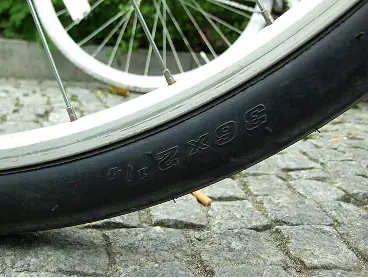
In basic physics, friction is often idealized as either static or kinetic, and dependent on only a few variables. Real tires exhibit more complex behavior. Explore experimentally and theoretically how rolling and braking friction1 depend on tire inflation pressure, speed, and surface conditions. Develop a model describing energy losses due to deformation and slip, and analyze how the conditions that minimize rolling friction differ from those that maximize braking performance. Extrapolate your work to automobile tires, and discuss the corresponding implications for fuel efficiency and carbon emissions.
Standing Waves
Explore how the frequency of standing waves on a string depends on the length, tension, linear density, and amplitude. Study an open string experimentally, here meaning a string under tension between two mechanically fixed end points (such as the bridge and nut of a guitar). Then consider a string whose effective vibrating length is shortened, and tension increased, by pressing it against the neck of an instrument with fixed frets (again a guitar provides a common example). Does the increase in tension have a measurable effect on the frequency? Measure the frequencies of open and fretted strings across a musical instrument, and compare them to the intended notes of the tuning system (for example, equal temperament). Consider whether the location of the frets should be adjusted.
Diodes
Diodes can be made from crystals such as galena, oxidized metals, or other semiconducting materials. Construct some, investigate their current-voltage characteristics, and study their reproducibility. Develop a model that explains their observed rectifying behavior, and identify the main sources of variability. Compare your results with the performance of modern commercial diodes. Discuss the applications of different types of diode. Consider using your home-made devices in a “foxhole radio.”
Walking Statues
The Moai of Rapa Nui were probably moved by rocking them from side to side, causing them to walk forward without toppling. Investigate, through theory and small-scale experiment, how a tall rigid body can advance through controlled rocking. Define the variables that affect step size, effort, and stability. Propose and test a quantitative model of this process. Determine whether an optimal base geometry exists under your criteria, and relate that to the shape of the actual Moai. See Lipo et al., J. Arch. Sci. 40, p. 2859 (2013).

Footnotes
Footnotes
-
Rolling friction is undesirable, causing energy loss even when rolling on level ground at nearly constant velocity. Braking friction results in desirable deceleration when the rider or driver takes action to reduce their speed. All experiments should be performed under controlled, safe conditions using tires sized for a bicycle or smaller. ↩